


SAP security, risk management and the transformation to SAP S/4HANA have become strategic priorities for companies looking to modernise their systems without compromising business continuity.
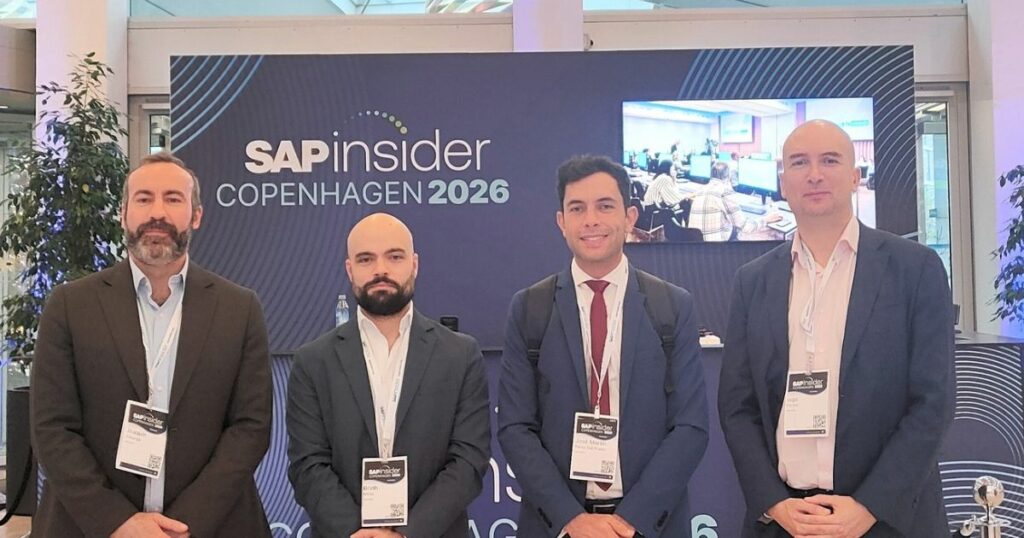
SAPinsider Copenhagen 2026, held from 16 to 19 November, brings together specialists, technology leaders and international organisations to address the main challenges facing the SAP ecosystem.
The event agenda focuses on issues that directly affect companies: how to manage security risks, improve access governance, automate controls and move towards more efficient, secure and future-ready SAP environments.
At Inprosec, specialists in SAP security, risk management and regulatory compliance, we analyse the main trends discussed at SAPinsider Copenhagen and their impact on organisations.
SAPinsider Copenhagen 2026: the future of enterprise SAP environments
SAPinsider is one of the SAP ecosystem’s international meeting points, where technology experts and organisations share knowledge on innovation, digital transformation and the optimisation of enterprise systems.
The Copenhagen 2026 edition features a programme of specialist sessions, customer experiences, hands-on workshops and networking opportunities for professionals.
Key areas of interest include:
- SAP security and enterprise cybersecurity: protecting critical systems against vulnerabilities and unauthorised access.
- SAP GRC and regulatory compliance: governance, risk management and control automation.
- Transformation to SAP S/4HANA: modernising SAP environments with security by design.
- Identity and access management: managing authorisations and preventing segregation of duties conflicts.
- Artificial intelligence and automation: adopting new capabilities to improve business processes.
- SAP Cloud Security: protecting hybrid architectures and cloud services.
These areas reflect an increasingly clear reality: SAP transformation needs a security strategy that evolves at the same pace as the technology.
SAP security: protecting critical business processes
SAP systems manage some of an organisation’s most sensitive processes: finance, procurement, human resources, production, logistics and business data.
An inadequate configuration, an unpatched vulnerability or an excessive authorisation can create operational, financial and compliance risks.
For this reason, SAP security must be approached from a comprehensive perspective that combines prevention, monitoring and continuous improvement.
What are the main SAP security risks?
The risks companies need to manage include:
- Users with excessive permissions over sensitive transactions or data.
- Technical vulnerabilities and insecure configurations.
- Segregation of duties (SoD) conflicts.
- Lack of visibility over privileged users.
- Manual or insufficient security controls.
- Risks associated with integrations between SAP systems and external applications.
How can companies reduce these risks?
Through regular audits, authorisation analysis, configuration reviews, vulnerability management and continuous monitoring.
An effective SAP Security strategy makes it possible to detect weaknesses before they become incidents and to strengthen the protection of essential business processes.
SAP GRC: governance, risk and compliance as a competitive advantage
Risk management and regulatory compliance are another major area of interest for organisations that use SAP.
Companies need to demonstrate that their systems have adequate controls, that access is justified and that critical processes can be audited.
In this context, SAP GRC (Governance, Risk and Compliance) helps to structure access governance, identify risks and improve the oversight of internal controls.
What are the benefits of an SAP GRC strategy?
A well-designed governance and compliance strategy makes it possible to:
- Identify and manage segregation of duties conflicts.
- Optimise access request and approval processes.
- Make audit preparation easier.
- Reduce manual tasks through automation.
- Improve the traceability of access decisions.
- Align SAP controls with regulatory requirements and internal policies.
The real value of SAP GRC lies not only in implementing a tool, but in establishing a governance model that keeps risks under control as the business evolves.
SAP S/4HANA: how to ensure a secure migration
The transformation to SAP S/4HANA remains one of the most significant technology projects for many organisations.
However, a migration is not simply a matter of moving data and processes to a new platform.
It also involves reviewing the authorisation model, adapting security controls and ensuring that users have only the permissions they need.
The main security challenges in SAP S/4HANA
Redesigning roles and authorisations
Legacy access models may not adequately meet the needs of the new environment. It is essential to review roles, permissions and SAP Fiori apps.
Segregation of duties
Changes to business processes can introduce new SoD conflicts that must be identified before go-live.
Protecting sensitive data
The transformation requires a review of access controls over critical information, especially where there are new integrations or cloud services.
Security by design
Building security requirements in from the start of the project reduces rework, improves risk control and prevents problems later on.
For organisations planning a migration, having SAP security specialists on board can be decisive in ensuring that technological modernisation does not create new exposures.
SAP access management: the challenge of controlling who can do what
One of the most important challenges in enterprise security is ensuring that each user has access only to the functions they need to do their job.
In complex SAP environments, upholding this principle can be particularly difficult due to the volume of users, roles, authorisations and connected applications.
Strategies for Identity and Access Management (IAM) and access governance help to improve this control.
Why is segregation of duties important in SAP?
Segregation of duties, known as SoD (Segregation of Duties), aims to prevent a single user from carrying out incompatible combinations of activities.
For example, having permissions to create a supplier and approve the related payments can pose a risk if there are no adequate compensating controls.
Continuously reviewing these conflicts reduces exposure to fraud, operational errors and breaches of internal policies.
In addition, automating access lifecycle management helps to improve efficiency and maintain greater traceability.
Artificial intelligence and automation: innovation with security controls
Artificial intelligence and automation are expanding the possibilities of the SAP ecosystem.
These technologies can help to optimise processes, analyse information and support decision-making.
However, their adoption also requires attention to governance and security.
Organisations must ensure that new automated processes comply with access policies, protect sensitive information and maintain adequate traceability.
The goal should not simply be to add new technological capabilities, but to do so within a control framework that allows their benefits to be harnessed responsibly.
SAP Cloud Security: new challenges in hybrid architectures
The shift towards cloud services and hybrid architectures brings new protection requirements.
Many organisations combine traditional SAP systems with cloud services, integration platforms and external applications.
This reality calls for particular attention to identity management, service configuration, connections between platforms and access monitoring.
An SAP Cloud Security strategy must cover both the protection of the infrastructure and the governance of the users and applications that interact with it.
What lessons does SAPinsider Copenhagen hold for companies?
The themes of SAPinsider Copenhagen 2026 point to five priorities for organisations that want to strengthen their SAP strategy.
- Build security in from the start. Cybersecurity must be part of transformation projects and not be limited to final reviews.
- Move towards proactive risk management. Continuous risk identification and monitoring helps to anticipate problems and improve response capability.
- Review identity and authorisation governance. Access models must adapt to new SAP processes and architectures.
- Automate compliance controls. Reducing reliance on manual processes increases efficiency and improves traceability.
- Align security with business objectives. Investment in protection must respond to each organisation’s real risks and support its transformation strategy.
How Inprosec can help improve the security of your SAP environment
Technological change brings significant opportunities, but it also requires companies to keep their security strategy under continuous review.
At Inprosec, we help organisations protect their SAP environments, improve risk management and strengthen regulatory compliance.
Our expertise focuses on areas such as:
- SAP security: risk identification, vulnerability analysis and improvement of security controls.
- SAP GRC: governance, risk management and compliance in SAP systems.
- Role and authorisation management: review and optimisation of access models.
- Segregation of duties (SoD): identification and remediation of access conflicts.
- Security in SAP S/4HANA projects: embedding security controls throughout transformation processes.
- SAP audit and compliance: risk assessment and strengthening of control mechanisms.
Our goal is to help companies achieve SAP environments that are more secure, more efficient and aligned with their business needs.
Conclusion: SAP transformation is only sustainable if it is secure
SAPinsider Copenhagen 2026 puts the spotlight on the challenges that come with the evolution of the SAP ecosystem: technological modernisation, automation, access governance, compliance and cybersecurity.
For organisations, the challenge is to seize the opportunities for innovation without increasing their exposure to risk.
SAP security is no longer just a technical responsibility: it is essential to business continuity, efficiency and trust.
At Inprosec, we keep a close eye on these trends to help organisations approach their SAP projects with specialist insight into security and risk management.
Do you need to strengthen the security of your SAP environment?
If your company is planning a migration to SAP S/4HANA, needs to improve its authorisation model or wants to identify security and compliance risks, our team can help.
Contact Inprosec and find out how we can help you protect your SAP systems and move forward with your digital transformation more securely.
Frequently asked questions about SAP security and SAP GRC
What is SAP security?
SAP security covers the controls, processes and technologies designed to protect SAP systems against unauthorised access, vulnerabilities and risks that could compromise business data or operations.
What is SAP GRC used for?
SAP GRC makes it possible to manage aspects of governance, risk and compliance, particularly in areas such as access control, segregation of duties and the oversight of internal controls.
Why is it important to review security during a migration to SAP S/4HANA?
Because changes to processes, applications and authorisation models can create new risks. Reviewing security during the migration makes it possible to design appropriate controls before the new environment goes live.
What is an SoD conflict in SAP?
It is a combination of permissions that allows a user to carry out potentially incompatible functions, creating risks of fraud, error or non-compliance if adequate controls are not in place.
When should a company carry out an SAP security audit?
It is advisable to schedule regular reviews and to carry out additional assessments when major changes occur, such as migrations, new integrations, significant role changes or security incidents.